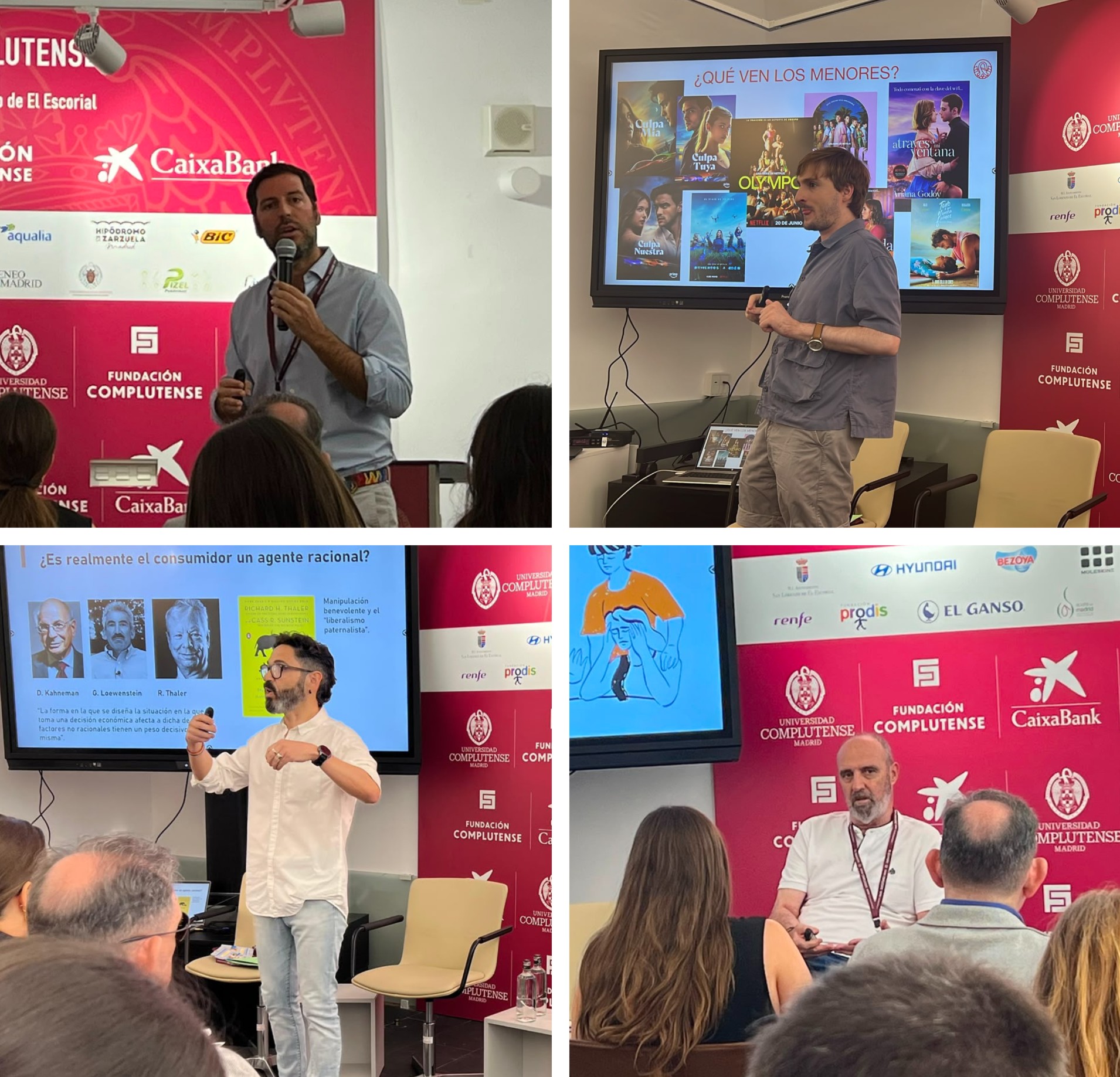

In line with this, the second edition of the summer course Substance-free addictions in minors: gambling, digital environments and the role of family and school, was held in San Lorenzo de El Escorial, as part of the prestigious Summer Courses of the Complutense University of Madrid (UCM), one of the most prestigious and well-attended academic summer gatherings in Spain.
The course was directed by Ubaldo Cuesta, full professor at UCM, and Guillermo Mejías, post doctoral researcher at the same university. It brought together specialists in health, audiovisual communication and addiction prevention, as well as a large numberof students enrolled from various disciplines, alongside social workers, educators, teachers and other professionals.
With a bold programme encompassing social, health-related, preventive, rehabilitative and even audiovisual and communication perspectives, the event opened with a presentation by Ignacio Civeira Marín, psychiatrist at the Hospital General Universitario Gregorio Marañón. In his talk, he analysed the role of the family from a dual standpoint: first, as a risk factor, given that it is the place where minors first encounter certain realities—not all of them positive; but above all, as a key protective element. In this regard, he highlighted the importance of accompanying children in their use of technology, through digital supervision and close, effective and also affective communication.
Television and streaming series screenwriter (nominated for Goya Awards) and oncologist Nach Solís then spoke about how substance-free addictions appear in film and series, and how they can influence different viewers—in this case, minors. He focused on how certain audiovisual content can normalise or down play specific risk behaviours, and on the responsibility of content creators when portraying these realities. He argued that creators "have the right and the obligation to offer our artistic product, to contribute to making the fiction we create reflect reality," while also noting that certain behaviours should not be romanticised, trivialised or idolised, and that many important issues should instead be brought to the fore.
Along the same lines, José César Perales, full professor of Psychology at the University of Granada, focused on what he sees as the contradictions within the traditional model of responsible gambling as it is known today. In his presentation, he advocated for the need to move towards a public health approach, with preventive and structural measures.
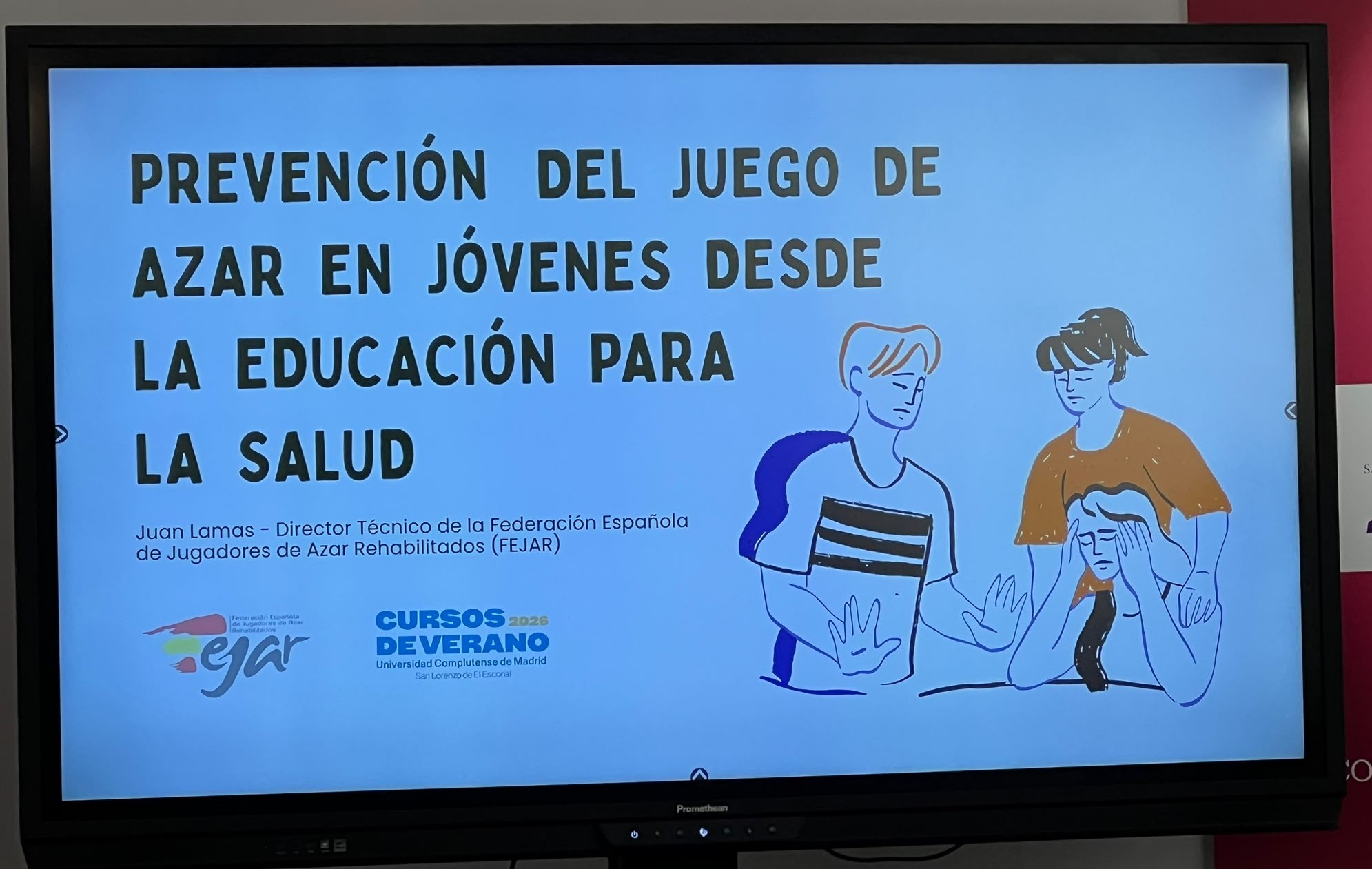
The course concluded with a practical workshop led by Juan Lamas, technical director of the Spanish Federation of Rehabilitated Gamblers (FEJAR). It focused on preventing gambling among young people through training and information. Lamas noted:
"Reality shows us that there needs to be much more education and information about the behaviour of minors and young people in order to prevent situations that will ultimately require treatment."
He identified changes in habits as a key future factor, making prevention even more important—but always driven and achieved in a positive way, especially with minors in family environments.
This second edition of the course, which generated lively debate among attendees, is a testament to the commitment of the ONCE-UCM Chair to research, outreach and the prevention of risks related to gambling and digital environments, particularly among children and adolescents. It also underscores the need to continue researching and promoting knowledge and information in academic settings.