

WLA and UNIL lead the global effort to combat illegal gambling operations
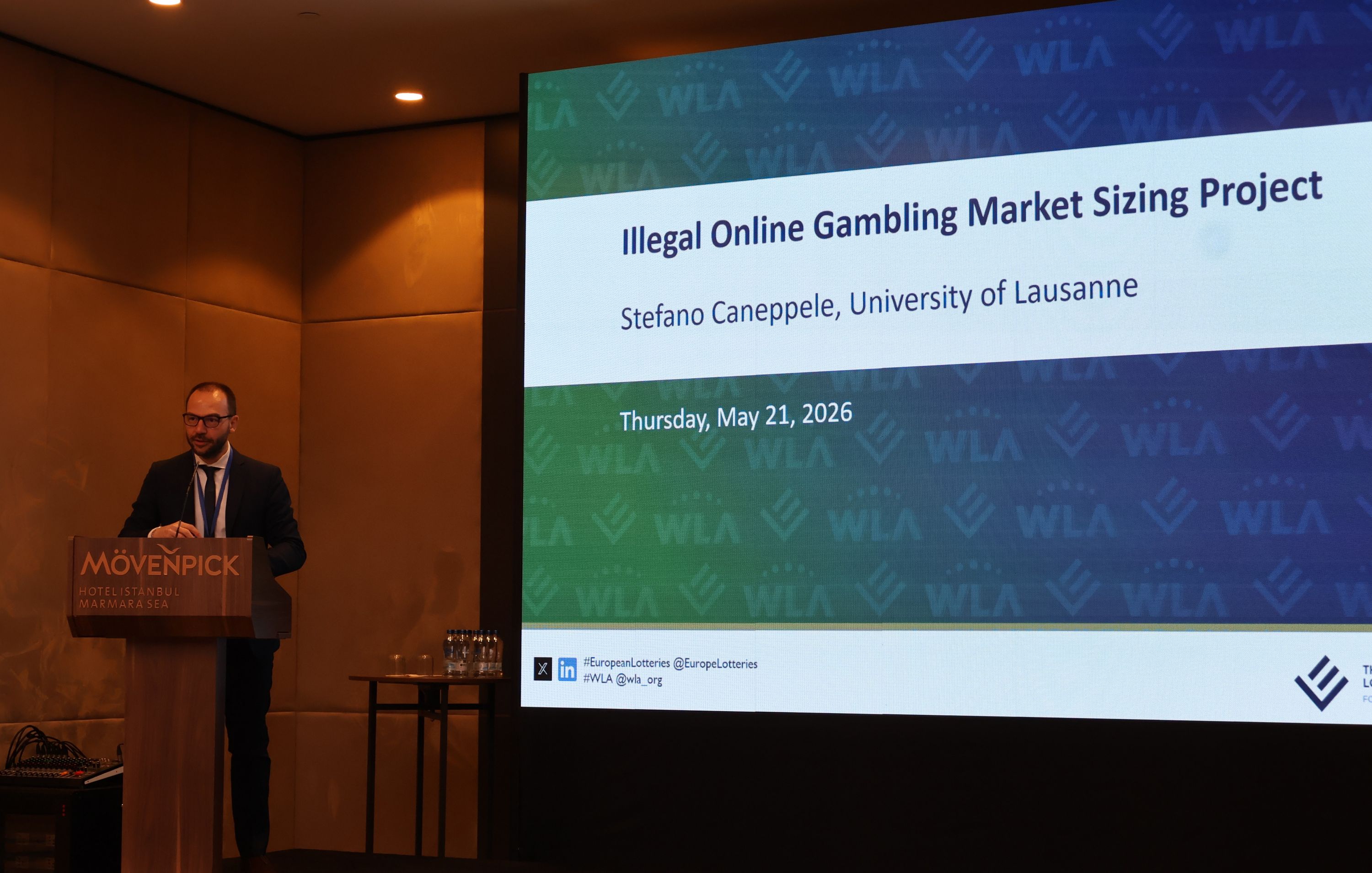
Professor Stefano Caneppele, Faculty of Law, Criminal Justice and Public Administration, Lausanne University, Switzerland, discussed the outcomes of the joint project with WLA to develop a standardized method to size illegal gambling markets.
“The WLA Illegal online gambling marketsizing project equips public authorities and institutional stakeholders with a robust methodological framework facilitating evidence-based dialogue amongregulators, enforcement agencies, and international organizations.”
Benefits of the new methodology include:
- Supporting regulatory decision-making - Regulators now have a structured, auditable basis for assessing illegalactivity with explicit uncertainty communication.
- Facilitating international dialogue - A commonmethodological language supports structured dialogue among national regulators,regional associations, and international bodies (UNODC, Council of Europe, INTERPOL)
- Strengthening data ecosystems - By identifyinggaps and establishing quality standards, the project creates incentives forjurisdictions to improve their own data — a positive feedback dynamic. Better data → more reliable estimates → more defensible policy.
- Positioning the WLA as reference institution -This project offers the WLA an opportunity to help shape a credibleinternational reference framework for illegal gambling market estimation, strengthening its role as a trusted source of global intelligence over time.
The work of the WLA Combating Illegal Lottery and Betting Committee
The WLA Combating Illegal Lottery and Betting Committee launched the project with the University of Lausanne in 2024.
Addressing the major issue that currently no globally credible and standardized way toestimate the true scale of illegal gambling activity exists.
The objective was to provide regulators and policymakers with a practical governance tool capable of producing yearly estimates using a common methodology across jurisdictions, allowing for meaningful comparisons and better informed policy decisions.
One important conclusion from the projectis that methodology matters enormously. In a field where many actors can claimvastly different numbers, credibility comes from transparency, rigor, and consistency of approach.
The project has also demonstrated that uncertainty is not necessarily a weakness. In some jurisdictions, where the pilot project was run, such as Germany, the wide range of possible outcomes itself reveals important structural realities about market volatility and regulatory transition.
The Macolin Convention and why it matters
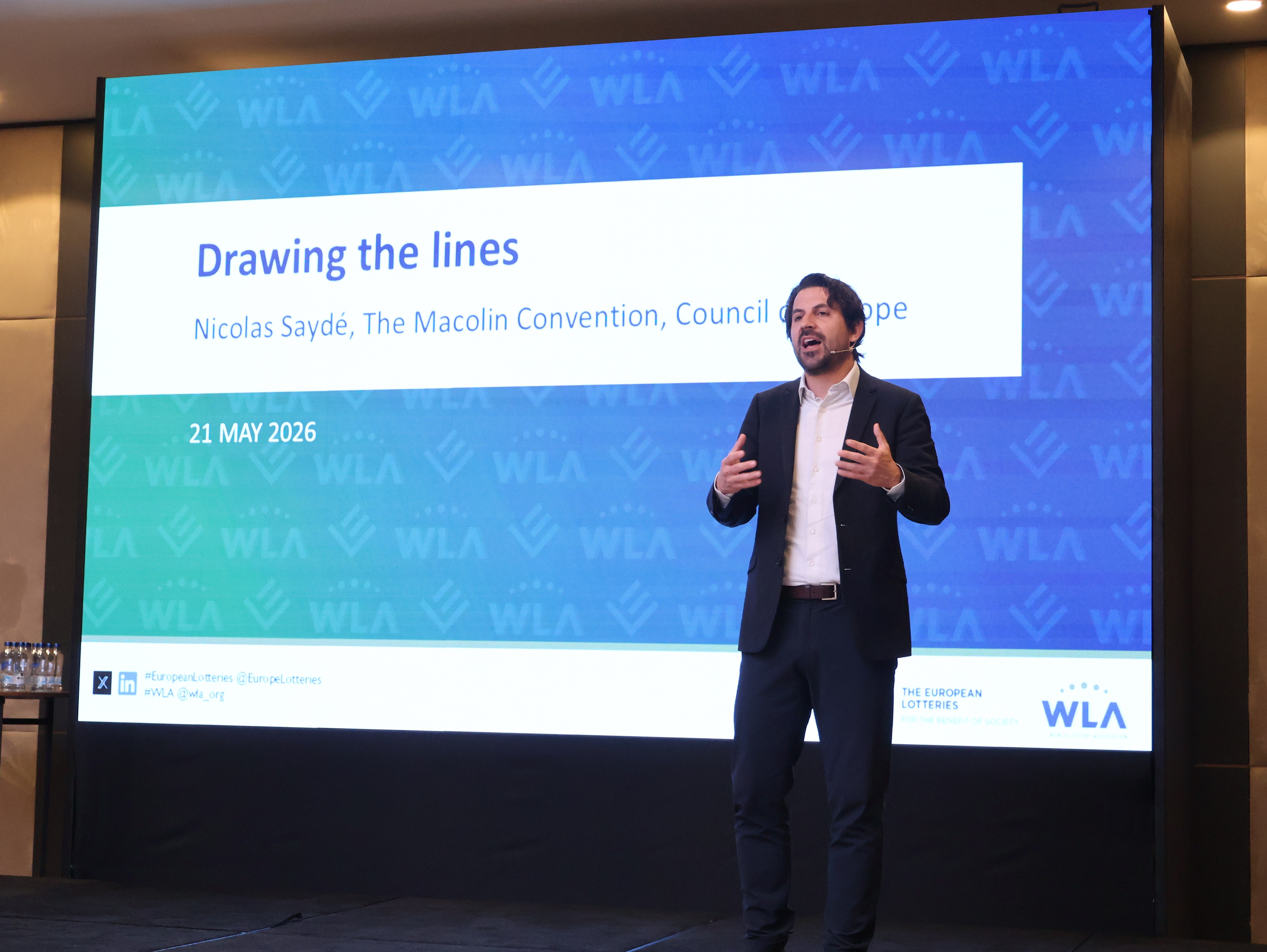
Nicolas Sayde, Sport Integrity Division, Council of Europe, discussed the aim and benefits of the Macolin Convention, against the backdrop of growing suspicious betting trends on under-18 matches, from 21, in 2021, to 160, in 2025, spanning multiple sports and continents, affecting both highly and lightly regulated markets.
International cooperation in action
The Macolin Convention – a unique international framework – is the first and only legally binding international instrument addressing competition manipulation in sports. It is open to all countries, with 43 signatories and 15 ratifications, covering manipulation, sports betting, and inside information and provides a shared vocabulary and legal basis for action.
Its definition of illegal betting has been upheld for two decades, reaffirmed by recent European Court of Justice cases (2026), and allows states to ban foreign-licensed games and enable players to recover stakes from void contracts.
“The Convention provides an opportunity for lotteries to compete fairly, supports port integrity, and amplify their voice globally.”
It is a call to action for lotteries to:
- Promote ratification of the Convention
- Strengthen national platforms
- Support ongoing work through funding (ACT II)
Regional insights and perspectives
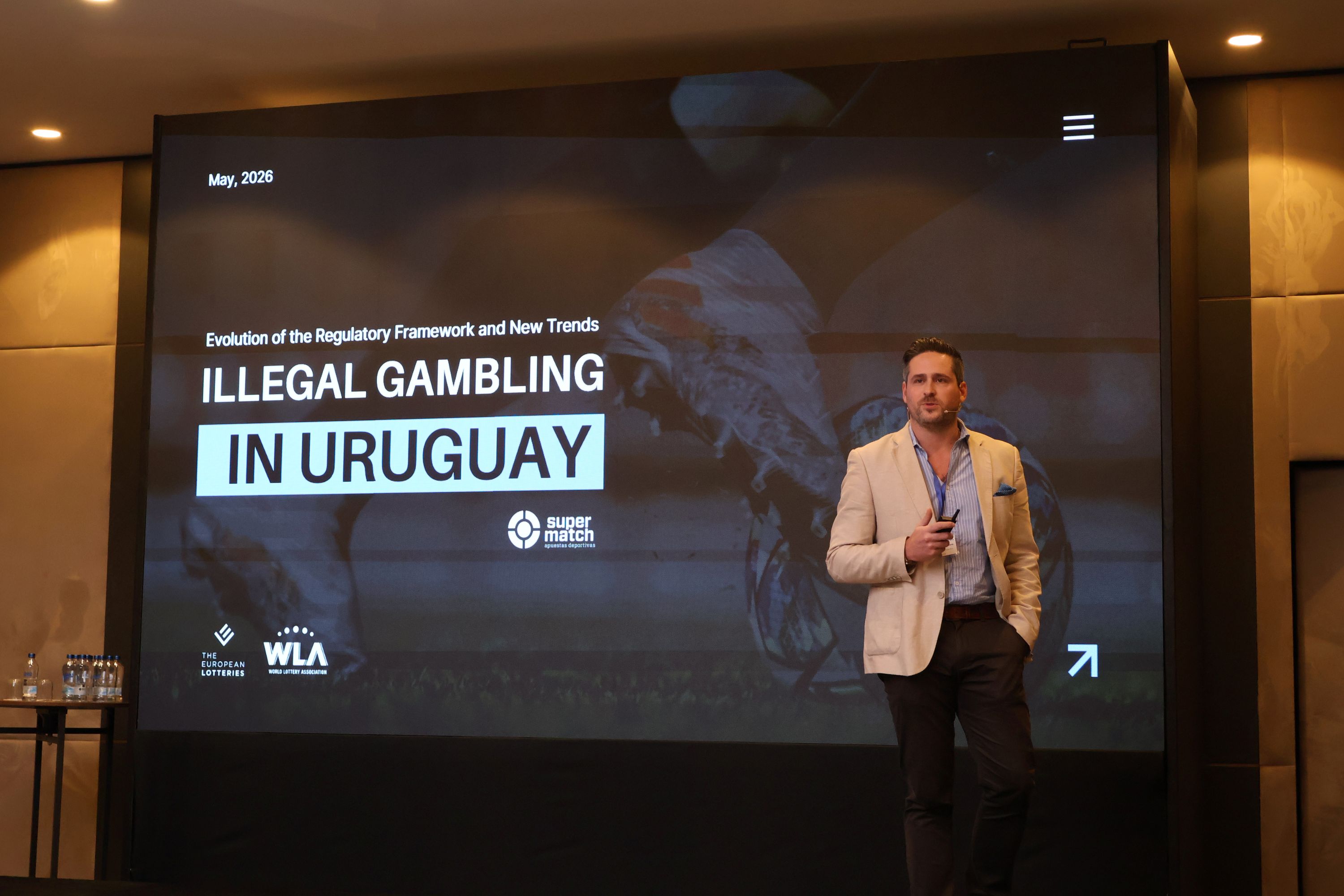
Fabian García Saettone, Sports Betting Manager, LaBanca, provided updates on the illegal gambling landscape in Uruguay, which has evolved into a more complex digital enforcement challenge, especially as online channels, cross-border payments, and crypto-enabled workarounds have expanded.
Action taken to address illegal sports betting have focussed on financial crime, demonstrating how weak onboarding, layered payment methods, mule accounts, and low-risk betting patterns can be used to move, disguise, and reintroduce funds into the formal economy.
As is the case in many jurisdiction facing the same issues, it is important that enforcement moves beyond simple site blocking, toward coordinated intelligence, payment disruption, stronger compliance controls, and cross-institution information sharing.
The legal framework
The legal Framework for combating illegal online gambling in Uruguay is Decree No. 366/017:
“Games of chance, gambling, or games of fortune are prohibited with the exception of lotteries and public raffles authorized by the Administrative Economic Boards in accordance with the regulations issued by the Executive Branch.”
The Framework comprises four key actions:
- Prohibition of online gambling
- Website blocking
- Financial blocking
- Advertising prohibition
Addressing digital trends
Tackling the growing use of e-wallets, the Central Bank of Uruguay expanded restrictions, and deepened financial controls to cover the expansion of regulatory scope; inclusion of e-wallets; obligation imposed on ewallet issuers; controls over end destination traceability of funds, and risks associated with alternative payment methods.
Previously, the most common way of finding illegal sites was through affiliate websites and related traffic channels.
However, reduced access to traditional illegal operators was achieved through a combination of website blocking, financial blocking and advertising prohibition.
Evolving illegal operations
New trends in illegal gambling in 2025 in the Latin America region show indirect effects of provincial regulation in Argentina which resulted in the migration ofillegal operators toward new acquisition channels.
Influencers are the new acquisition channel through different means including:
- Social media for customer acquisition
- Bonus offers and promo codes
- Dynamic URL distribution
- Disintermediation of traditional affiliate platforms
Technology – bringing challenges and solutions
LaBanca is working on a new scrapping spider system powered by AI to detect key words and website templates that follow gambling patterns and their interactions with social media.
How Morocco combats illegal sports betting
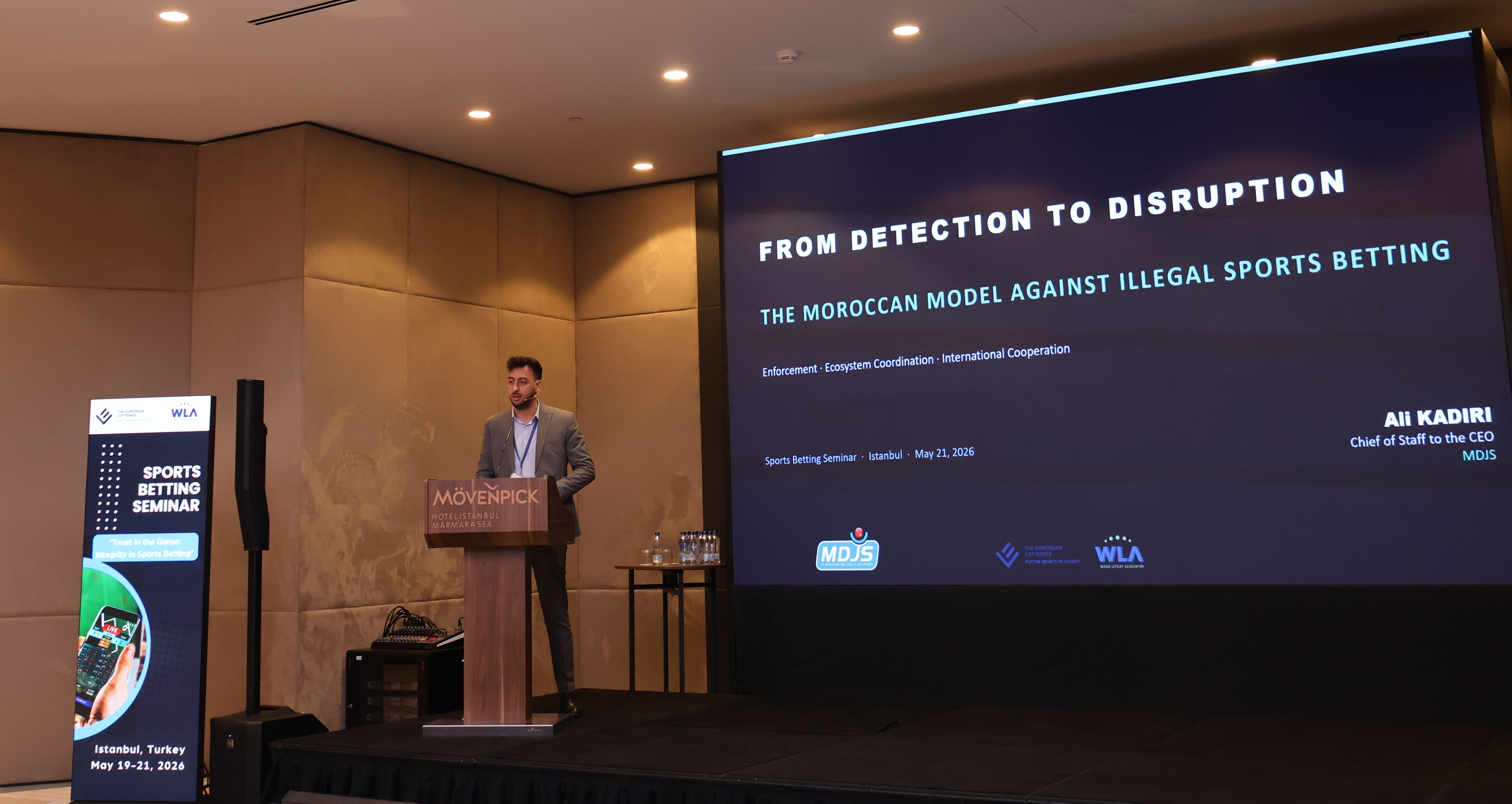
Ali Kadiri Hassani, Chief of Staff to the CEO, La Marocaine des Jeux et des Sports, (MDJS), Morocco, explained the coordinated response to illegal sports betting and its impact on sports integrity and legitimate institutions, launched at the Rabat AIPS Congress in May 2025, and presented the Moroccan model against illegal sports betting, which has focused on both governance and measurable enforcement activity.
“In 2025, MDJS laid the foundations of a robust, coordinated, and recognized strategy, capable of adapting to the constant evolution of illegal practices while protecting bettors, sport, and the national economy.”
The 2025 Action Plan
Structured around five complementary levers which act to reduce visibility, restrict access, sanction illegal practices, and preserve the legal ecosystem, the Action Plan is based on five pillars:
Pillar 1: Sportssponsorship — reclaiming the sports space
Pillar 2: Legal actionand fight against illegal digital promotion
Pillar 3: Blocking illegal platforms and fraudulent applications
Pillar 4: Institutional and parliamentary mobilization
Pillar 5: Media mobilization and educational role
Positive outcomes
Kadiri Hassani noted successful results of zero illegal operators in national championship stadiums; several influencers and agents brought into compliance following cease-and-desistactions, and reinforced institutional credibility of MDJS.
He also highlighted the dedicated Task Force to combat illegal gambling, established in 2023 by MDJS and SISAL, which brings together representatives from both parties, and where required, external experts to strengthen its capabilities. The main mission is to propose, validate, coordinate, and monitor all actions carried out against illegal betting.
The Task Force is fully aligned with Morocco’s commitments under the Macolin Convention, with key objectives to:
- Close or restrict access to illegal sports betting operators, whether online or land-based.
- Block financial flows between illegal operators and players to disrupt their financing channels.
- Prohibit advertising for unauthorized operators in order to reduce their visibility and attractiveness.
- Raise consumer awareness about the risks associated with illegal betting, a key lever for reducing demand.
Inside AFCON 2025 — Building a Real-Time Integrity Monitoring System
Kadiri Hassani, also elaborated on the project to build a real-time integrity monitoring system, and lessons learned.
The system offered an enhanced integrity protection framework to safeguard the largest continental sporting competition – Africa Cup of Nations (AFCON) 2025, from organized crime risks – to detect betting- and crime-related risks, coordinate responses, and capture lessons for future events.
It was achieved with the close coordination of sports and intergovernmental organizations: CAF (African Football Confederation), the Group of Copenhagen, ANJ(France); specialized networks: ULIS, WLA, Sportradar, and Regulatory Authorities & Public Bodies, INTERPOL, UK Gambling Commission, Belgian Police, and GGL (Germany).
This collaborative and operationally intensive effort, uniting stakeholders from across the global lottery, sports betting and sports ecosystem, combined daily reporting, live debriefs, and support from multiple international regulators, law enforcement bodies, and integrity partners.
Lessons learned
Kadiri Hassani emphasized that tournament integrity requires both technology and cross-border coordination, with AFCON serving as a case study for a stronger, repeatable monitoring model.
“AFCON 2025 confirms Operator's capacity to anticipate, monitor, and manage integrity risks associated with major international sporting events.”