How LaBanca embeds responsible gaming in game design to keep players safe

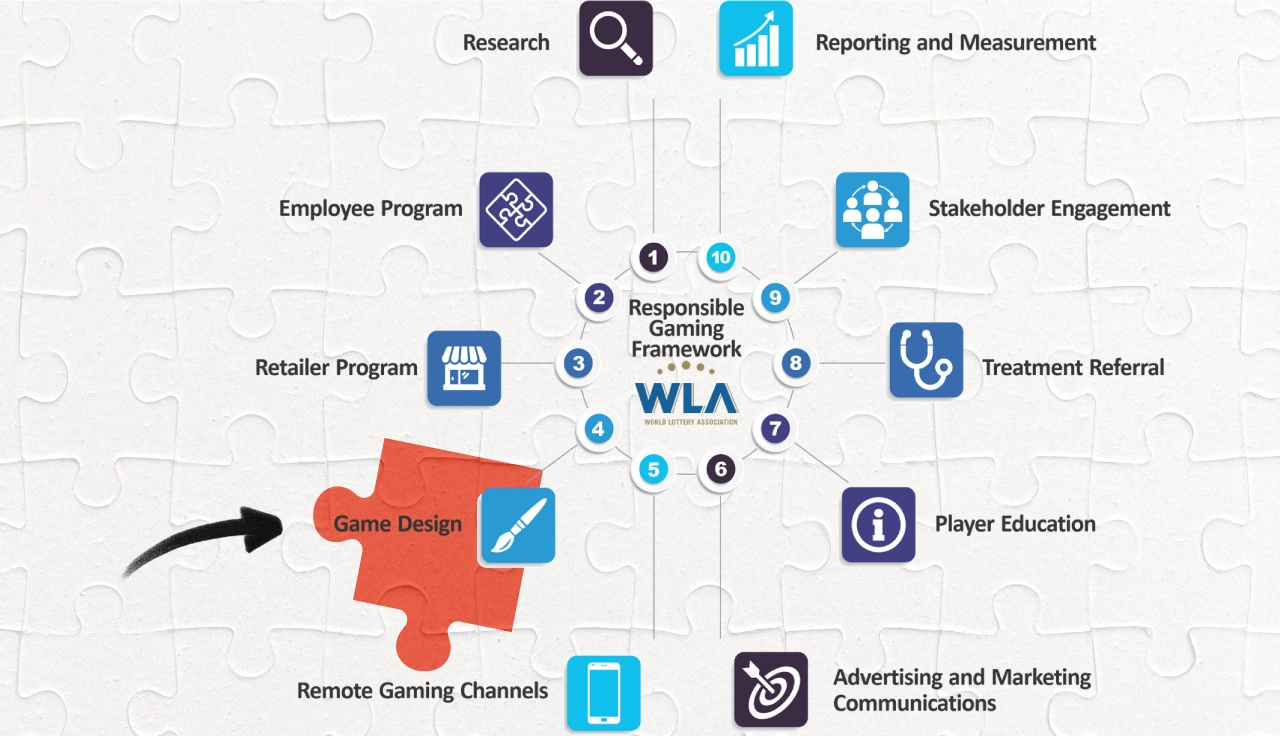
The regulated lottery and sports betting industry puts player safety first. Many WLA members deploy artificial intelligence technologies across operations to enhance the player experience and ensure safe, secure gaming and betting environments. An important starting point for Responsible Gaming (RG) is with game design.
Sandra Conde is General Manager at Banca de Cubierta Colectiva de Quinielas de Montevideo, (LaBanca), in Uruguay. She is also an elected member of the WLA Executive Committee, Latin America Representative on the WLA RG Working Group, and Member of the CIBELAE CSR and RG Committee.
WLA Magazine caught up with Conde, to learn how the lottery achieves responsible gaming, through the game design process.
How important is a game design policy and what should it contain?
We offer both lottery and sports betting products. Our aim is to create games that fully meet the demand of the Uruguayan market. They must offer appropriate, attractive, and safe products, based on innovation and research, with quality service and strict compliance with existing regulations and the principles of Responsible Gaming. We design and build our own games, using inhouse technology and international industry standards.
In order to achieve this, we developed a game design policy to ensure that responsible gaming requirements are part of the entire game design process.
In addition to this, employees involved in designing our games, such as developers and audiovisual designers and marketing specialists receive RG training on impact of game features, game research, and impact on vulnerable groups.
Additionally, we undertake internal and external compliance audits, including: successful certification to the Level 4 of the WLA RG Framework, and Level 2 of the WLA Security Control Standard, and to ISO and ISO/IEC standards for quality, and information security management.
What are some of the game design RG requirements?
Our goal is to offer safe, transparent entertainment for players to enjoy without undue risks or false expectations. We need to find a balance between an ethical, transparent approach to protect players from harm, by providing clear information and control tools, with products that have a strong technical and visual quality, as well as a focus on innovation.
Our game design process includes: a quality-certified process (ISO 9001), meeting RG requirements, which is overseen by our RG committee. We carry out a risk analysis and assess potential harm to young people and appeal to minors and we monitor user behaviour once the product has been launched.
Our game design principles aim to protect minors by:
- Creating adult-oriented content
- Not using language or symbols commonly used by teenagers
- Not using characters or cartoons that look like children’s tv shows
- Not targeting minors or vulnerable groups.
- Not using celebrities who primarily appeal to minors
What does the RG Committee do?
The RG Committee is responsible for reviewing the game design against RG requirements, either of new or existing games. It uses a risk analysis tool, which considers the potential impact on minors, to assess and define RG measures to implement. This information is fed back to the Game Design and Development Committee which will incorporate the findings into the design specifications from the outset or if an existing game is being reviewed make changes where relevant.
The Committee also carries out pre-launch validation and post‑launch impact review to analyse user behaviour and adjust measures or fixes as needed.
What are some of the measures in place to foster responsible playing?
There are daily and monthly mandatory loss limits and play breaks, and we monitor and send personalized messages where relevant.
We are always looking to improve by using AI in player behaviour monitoring for early risk detection. We can send in-play personalized messages to encourage players to use RG tools for setting limits; provide them with feedback of their personal activity, and offer customized reminders, when needed.
All these measures help all players, but do you have any specific activities that target gambling risks for emerging adults aged 18 to 24?
We are implementing digital identification for all users of our digital channels. Over the past year, we have prioritized making this requirement mandatory for users aged 18 to 25.
In parallel, we have developed Responsible Gaming awareness campaigns specifically targeted at this age group, using influencers and communication channels to effectively reach younger audiences.
Additionally, for the past two years, we have conducted awareness workshops in educational and sports centers, aimed at young people and importantly at the adults around them, who play a key role as prevention agents in the early detection and treatment of potential issues.
About
Media inquiries
Legal notice

PLATINUM Contributors




Gold Contributors


The views expressed in the WLA magazine are those of the authors and do not necessarily reflect the views of the WorldLottery Association.

This pop-up contains legal information about this website.
This content is the property of the World Lottery Association (WLA). It may not be transferred
from the custody or control of the WLA except as authorized in writing by an officer of the WLA.
Neither this document, nor the information it contains, may be used, transferred, reproduced,
published, or disclosed, in whole or in part, either directly or indirectly, except as expressly
authorized by an officer of the WLA, pursuant to written agreement.
The WLA Website has been designed to provide information to the lottery community. The World Lottery Association has used great efforts to provide accurate and up-to-date information. However, WLA excludes any warranty, whether express or implied, for any information provided under these pages. WLA cannot be held responsible for any action taken that is based on the information hereunder.
The WLA Website also contains third party information. Such information is, wherever practically possible, marked with the name of the source and does not necessarily represent the opinion of the World Lottery Association. WLA does not take any responsibility whatsoever for such third party information.
The WLA Website also contains links to other Internet sites. WLA does not have any knowledge of the information contained in such other sites, nor has WLA been able to include such other sites in its efforts to provide accurate information. WLA therefore does not take any responsibility whatsoever for such third party information.
All rights reserved except where indicated.
